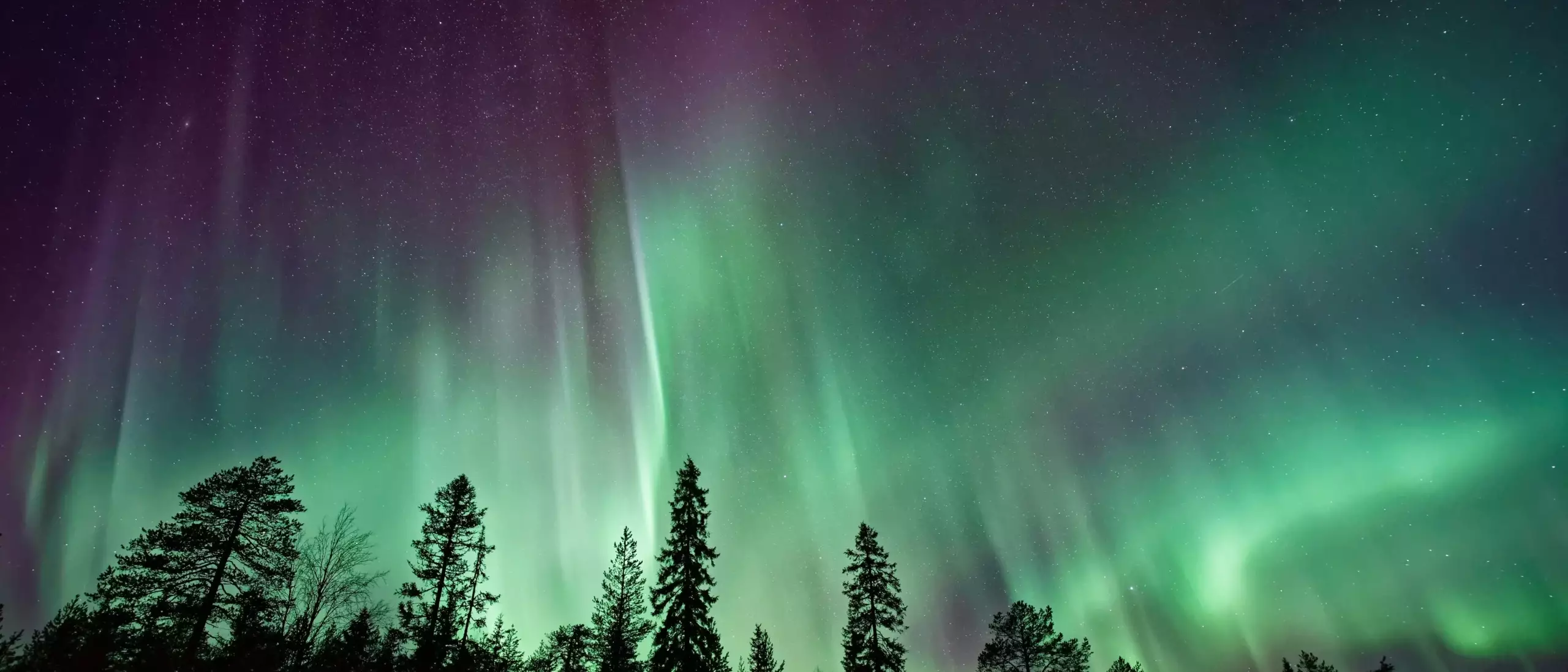
Fairbanks, Alaska's second-largest city, occupies a wide interior valley at 64.8°N where the Chena and Tanana rivers converge amid boreal spruce forest. It is North America's most celebrated aurora destination — a city where geomagnetic displays are not a novelty but a seasonal fixture, woven into daily life from late summer through spring. The University of Alaska Fairbanks Geophysical Institute maintains one of the world's foremost aurora research programs and operates a public aurora forecast website. Chena Hot Springs Resort, 60 km northeast, has built its entire winter tourism model around aurora — providing geothermally heated outdoor pools where visitors can soak at –30°C while watching green curtains overhead.
Fairbanks sits at geomagnetic latitude 65°N, directly under the auroral oval's primary band. The North American geomagnetic pole's proximity boosts Fairbanks's aurora effectiveness beyond what its geographic latitude alone would suggest. Solar wind electrons and protons channelled by magnetic field lines dump their energy into the atmosphere above Fairbanks with remarkable consistency — even during solar minimum, the city sees aurora regularly. KP 2 is sufficient for visible displays, and the interior Alaska atmosphere, dry and free of marine moisture, provides excellent optical transparency that makes even faint aurora vivid to the naked eye.
The aurora season in Fairbanks spans an extraordinary 8+ months — from mid-August when astronomical darkness returns through late April before midnight sun takes over. This long season is a distinct advantage over European destinations. August aurora is genuinely magical: temperatures are comfortable (10–15°C), the landscape is still green, and the first displays of the year arrive over an unfrozen Chena River. September and October see the first autumn colours. November through January is peak darkness and cold. February, March, and April offer the equinox enhancement with moderating temperatures.
Chena Hot Springs Resort is the flagship aurora experience — book the outdoor hot tubs and the Aurora Borealis Observatory for a guided, warm, and scientifically informed night. For independent viewing, the Steese Highway north of Fairbanks (Route 6) climbs out of the valley and into open tundra within 30 minutes of the city, providing excellent dark horizons. The Ester Dome area west of the city is a popular local photography spot. UAF's Geophysical Institute campus on the hill has open viewing areas. In extreme cold below –40°C, car battery failure becomes a real risk — carry jumper cables and a block heater plug-in for parking at remote locations.
Fairbanks's interior continental climate — shielded from Pacific moisture by the Alaska Range — produces remarkably dry conditions with only 270 mm of annual precipitation. This translates directly to clear nights: Fairbanks averages approximately 240 clear nights per year, comparable to Yellowknife. Winter temperatures are extreme (–40°C is not unusual in January), but cold air is dry air — atmospheric moisture that creates cloud and reduces aurora visibility is minimal. Ice fog can form in the Chena Valley on the coldest, calmest nights, but this clears rapidly with any wind or when you drive to higher ground.
Frequently Asked Questions
Can you see the northern lights in Fairbanks?
Fairbanks is North America's best city for aurora viewing. Positioned directly under the auroral oval at geomagnetic latitude 65°N, KP 2 is sufficient for displays. The city averages roughly 240 aurora-capable nights per year. Chena Hot Springs Resort and the UAF Geophysical Institute provide world-class aurora infrastructure. The season runs from mid-August through late April — longer than almost anywhere else in the world.
What KP index is needed to see aurora in Fairbanks?
KP 2 is reliable for aurora in Fairbanks. Because the city sits directly inside the auroral oval at geomagnetic latitude 65°N, even quiet solar conditions energise the atmosphere above the city. At KP 3–4, structured overhead displays are typical. At KP 5+, full-sky events with multiple simultaneously active arcs and coronas occur. The dry interior Alaska air makes even faint aurora more vivid than at comparable latitudes elsewhere.
When is the best time to see northern lights in Fairbanks?
Mid-August through late April — an 8-month season. August is ideal for mild-weather aurora; September–October adds autumn colours; November–January delivers polar darkness; February–March sees equinox-enhanced activity with improving temperatures. The UAF Geophysical Institute publishes a forecast that locals rely on daily. For most visitors, February and March balance aurora frequency, manageable cold, and the breathtaking snow-covered boreal landscape.
Can I see the northern lights in Fairbanks tonight?
Check PolarForecast and the UAF Geophysical Institute's aurora forecast for Fairbanks. Any KP at 2 or above with a clear sky is worth heading out. Drive north on the Steese Highway or book a nightly tour from Chena Hot Springs. Set your alert at KP 2 — in Fairbanks, that's already enough for a genuine display. Don't wait for high KP numbers here.