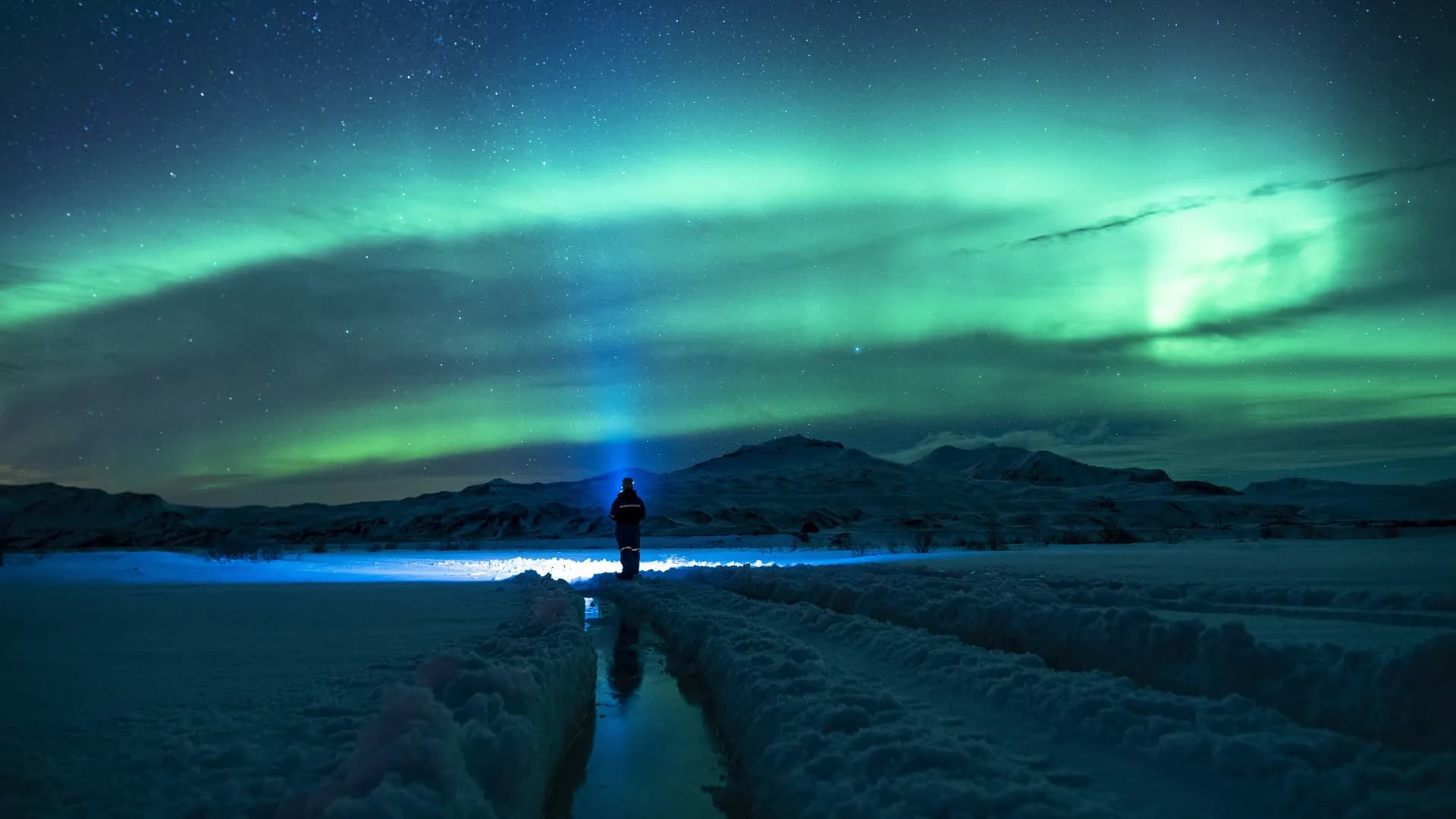
Tromsø sits at 69.6°N on an island in the Tromsøysundet strait, deep inside the auroral oval and widely regarded as the world's most accessible aurora capital. The city of roughly 75,000 combines genuine Arctic darkness with airports, hotels, guided tours, and restaurants that make multi-night aurora trips practical rather than expeditionary. Within minutes of the centre you can reach dark fjord shorelines; within an hour you are among the Lyngen Alps or on Kvaløya's western beaches. That mix of infrastructure and wilderness is why Tromsø dominates aurora search traffic — and why PolarForecast tracks KP, cloud cover, and viewing probability here every night of the season.
At geomagnetic latitude 66.5°N, Tromsø lies in the auroral oval's core zone. Electrons guided along Earth's magnetic field regularly energise the atmosphere overhead even during quiet solar conditions, so KP 1 is often enough for visible aurora from dark sites near the city. During KP 3–4, structured arcs and curtains appear overhead; at KP 5+ the sky can fill with rays, coronas, and colour shifts toward magenta and violet. Because Tromsø sits on an island ringed by fjords, natural dark corridors open to the north and east, reducing urban sky glow compared with a dense continental city of the same size. Magnetic midnight — typically near 11 PM–12 AM local time — is statistically the most active window, though substorms can erupt earlier or later.
October through March is prime aurora season in Tromsø. Polar night runs from about 27 November to 15 January, when the sun stays below the horizon and darkness lasts around the clock. Late September and October combine equinox-boosted geomagnetic activity with milder temperatures and colourful autumn landscapes. November into early December often brings the season's best cloud statistics before deep winter Atlantic lows dominate. February and March remain excellent: nights are still long, storm statistics stay favourable, and daytime light returns for sightseeing. Summer is useless for aurora — the midnight sun keeps the sky bright all night.
Take the Fjellheisen cable car to Storsteinen at 421 m for panoramic dark-sky views above city glow — popular, so arrive early on clear nights. Drive west onto Kvaløya for beaches and open northern horizons with far less light pollution. The Lyngen Alps, roughly 1.5 hours east, deliver dramatic mountain foregrounds and deeper darkness. Sommarøy and Ersfjordbotn are reliable coastal alternatives when weather windows open. Book a dedicated aurora fjord cruise on calm nights — reflections on still water are extraordinary. Always cross-check PolarForecast's cloud layer with KP: in Tromsø, clear skies matter more than chasing high KP alone. Dress for −10 to −20°C with wind, and keep camera batteries warm in an inner pocket.
Tromsø's coastal subarctic climate is dominated by Norwegian Sea weather systems. Low-pressure fronts bring frequent cloud, and fully clear winter nights occur roughly 30–40% of the time — lower than inland Alta or Abisko's famous blue hole. The Lyngen Alps to the east cast a slight rain shadow that can open clearer pockets inland while the city sits under stratus. Weather flips quickly: a socked-in afternoon can become a crystal night by 10 PM, so stay flexible and ready to drive. Late November and early December often show the best cloud-frequency statistics before deep winter lows settle in. When coastal cloud persists, check conditions toward Skibotn, Nordkjosbotn, or further inland toward Finland — short drives regularly rescue an otherwise cloudy Tromsø night.
Frequently Asked Questions
What is the best time to see northern lights in Tromsø?
October through March. Polar night from late November to mid-January gives the longest dark windows. Late September–October and February–March combine strong geomagnetic statistics with more manageable temperatures and occasional clearer spells. Stay at least 4–5 nights to outlast coastal cloud.
What KP level is needed to see northern lights in Tromsø?
KP 1 is often enough from dark sites — Tromsø sits inside the auroral oval. Faint green arcs appear on quiet nights; KP 3–4 produces vivid overhead displays. High KP helps, but clear skies are the real gatekeeper. Use PolarForecast's live KP and cloud forecast together.
Can I see aurora from Tromsø city centre?
Strong displays can be visible from town, especially looking north over the water, but light pollution washes out faint aurora. For the best experience, get 15–20 km out — Kvaløya, Ersfjordbotn, Sommarøy, Fjellheisen, or the Lyngen Alps. Guided tours handle the logistics if you prefer not to drive icy roads at night.
How many nights should I stay in Tromsø for aurora?
Plan 4–5 nights minimum, ideally a week if budget allows. Cloud cover is the main obstacle on the coast, and statistics favour multi-night stays. Build buffer days and keep transport flexible so you can chase clear gaps inland when Tromsø itself is overcast.