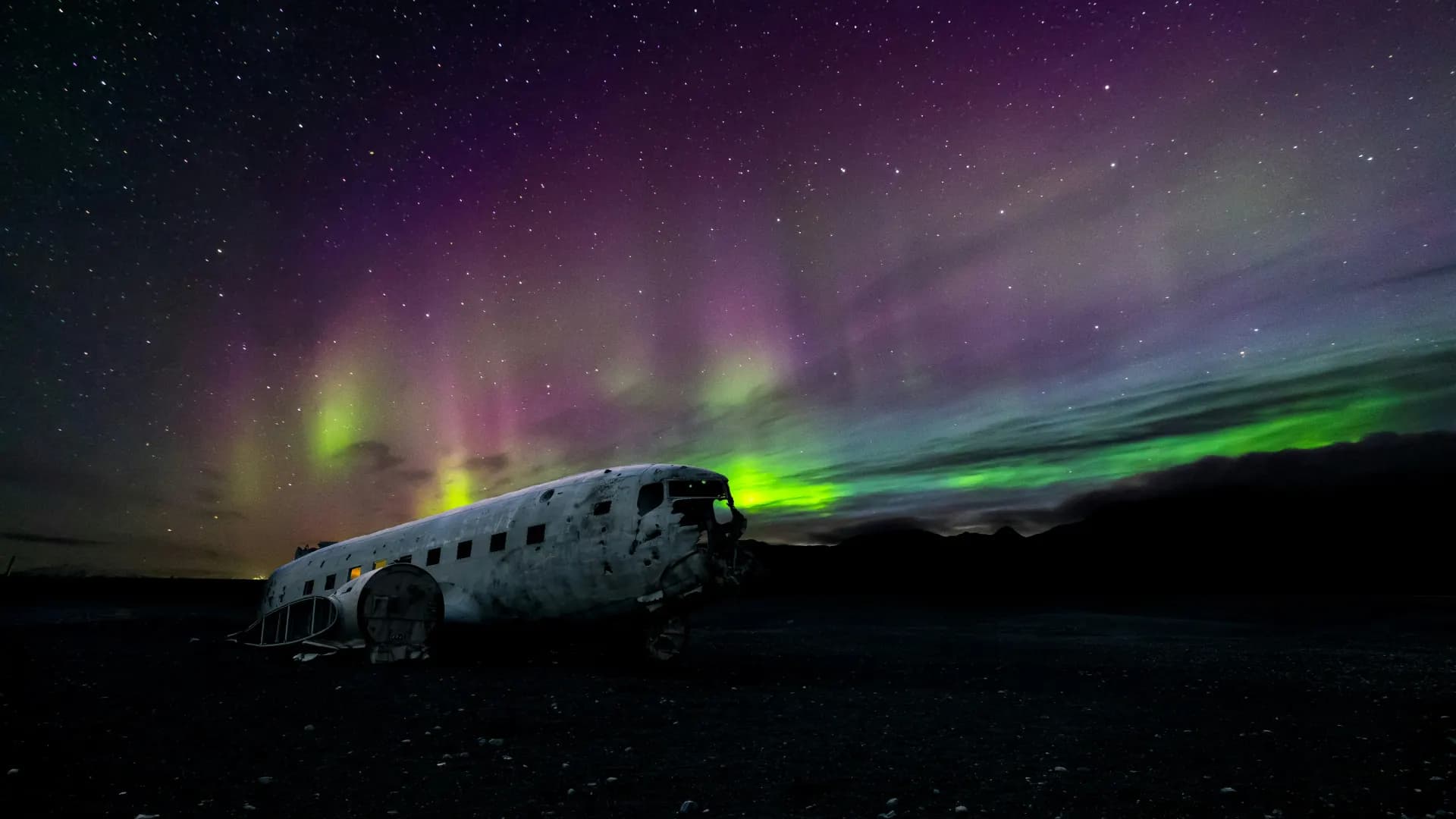
Kiruna is the northernmost city in Sweden, perched at 67.9°N in the heart of Swedish Lapland amid a landscape of ancient birch forests, frozen rivers, and the Kebnekaise mountain massif. Best known internationally for the ICEHOTEL in nearby Jukkasjärvi — a hotel rebuilt from fresh river ice each winter — Kiruna has evolved into one of Scandinavia's premier aurora tourism hubs. The city itself is in the midst of a dramatic relocation project, moving 3 km east to accommodate expansion of the world's largest underground iron ore mine. This only adds to Kiruna's character as a place defined by extremes: extreme cold, extreme darkness, and extreme aurora.
At geomagnetic latitude 65°N, Kiruna sits squarely within the auroral oval's core — the band of maximum aurora frequency that encircles the geomagnetic pole. This means that even at KP 1, aurora is possible on a clear night. The oval dips directly over Kiruna rather than appearing on the horizon, producing overhead displays rather than distant arcs. Kiruna also benefits from lower atmospheric humidity compared to Norwegian coastal locations, which means the moisture that attenuates light in the lower atmosphere is less of a factor, often resulting in visually crisper aurora. The elevation of 451 m places the town above the lowest-lying frost fog that can develop in the valleys.
September through March provides the full aurora season in Kiruna. September is the earliest month with true astronomical darkness returning after the midnight sun, and it can be a spectacular month: clear air, autumn-coloured birch leaves, and the first aurora of the season arriving over an unfrozen landscape. November through January are the darkest months, with polar night arriving in late November and lasting until mid-January. February is often regarded as the optimal month — aurora activity is high, temperatures are cold but not extreme, and the snow cover is at its most beautiful.
The ICEHOTEL and its surrounding grounds at Jukkasjärvi, 18 km from Kiruna, are set up for aurora nights — the hotel's outdoor hot tubs allow viewing in comfort even at –20°C. For photography, drive to Lake Torneträsk's southern shore for a vast, flat, dark horizon with perfect lake reflections. Abisko National Park, 100 km west, offers even better sky conditions (see Abisko entry). Within Kiruna, Luossavaara hill provides a dark elevated position. Hire a snowmobile guide for access to more remote viewing spots; they also carry emergency gear essential at these temperatures.
Kiruna's interior Lapland position gives it a subarctic continental climate that is notably drier and clearer than the Norwegian coast. Sitting on the lee side of the Scandinavian mountain range relative to Atlantic weather systems, Kiruna receives far less cloud cover than Tromsø or Alta. Annual precipitation is modest — roughly 600 mm — and winter cloud cover averages around 50–60%, leaving substantial clear-night opportunities. Inversions are common: valley bottoms can fill with frost fog while hilltops and elevated lake shores enjoy completely clear skies. This makes elevation an important factor for viewing site selection.
Frequently Asked Questions
Can you see the northern lights in Kiruna?
Absolutely. Kiruna at 67.9°N is inside the auroral oval — even KP 1 is sufficient for aurora on a clear night. The city averages over 200 aurora nights per year when skies are cloud-free. With the ICEHOTEL in nearby Jukkasjärvi and extensive guided tour infrastructure, Kiruna is one of Sweden's most established aurora destinations.
What KP index is needed to see aurora in Kiruna?
KP 1 is technically sufficient for aurora in Kiruna because the city sits directly under the auroral oval at geomagnetic latitude 65°N. In practice, a KP of 2–3 produces reliable, structured displays. KP 4 and above delivers vivid overhead curtains. The main limiting factor is cloud cover, not geomagnetic activity — Kiruna's skies are clearer than the Norwegian coast, giving it an edge for aurora frequency.
When is the best time to see northern lights in Kiruna?
September through March is the full season. September offers the first aurora over autumn birch forests; November brings polar night; February and March combine high geomagnetic activity with breathtaking snow landscapes. January is the darkest month. The ICEHOTEL is operational November through April, making that range the most visited period.
Can I see the northern lights in Kiruna tonight?
Check PolarForecast for Kiruna's live KP forecast and cloud cover map. Any KP above 1 with a clear sky is worth going out for. Set a KP alert at level 2 and head to Lake Torneträsk or Luossavaara hill. The ICEHOTEL staff also monitor conditions and often alert guests when aurora is active. Don't wait for high KP — in Kiruna, even quiet nights reward patient observers.