See local tour operators and small-group aurora viewing trips around Lofoten, including options with photography guidance and heated transport.
Some links on this page are affiliate links. Polar Forecast may earn a commission at no additional cost to you.
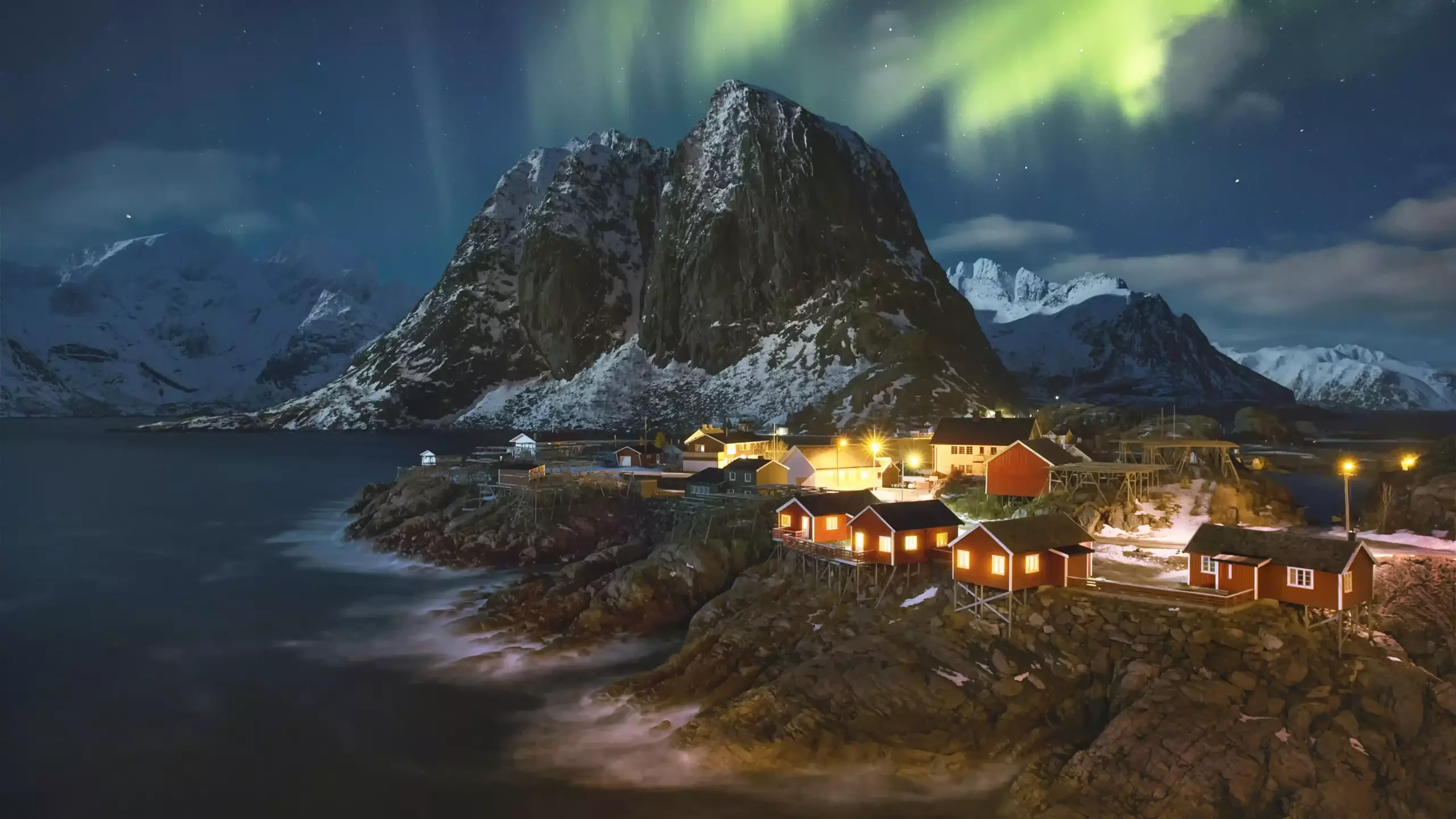
The Lofoten Islands produce some of the world's most photographed northern lights. Dramatic granite peaks rising from the Arctic Ocean, traditional red rorbu fishing cabins, and mirror-calm fjords create a backdrop that turns every aurora display into an otherworldly scene. At 68°N the islands sit slightly south of Tromsø's core oval position, so KP 2+ is the practical threshold — but once that bar is cleared, Lofoten rewards photographers and travellers with scenery no other Arctic hub can match. Expect wild weather, iconic villages, and nights where a 30-minute clear gap is enough for a career image.
Lofoten sits at geomagnetic latitude 64.5°N, just below the auroral oval's most active band. At KP 2 or above, the oval expands to include the archipelago and aurora becomes reliably visible from dark beaches and mountain overlooks. At KP 3–4, expect vivid overhead structure; stronger storms push colour and motion across the entire northern sky over open ocean. The west-facing coastline offers spectacular northern and northwestern horizons, though that same exposure invites Atlantic cloud. Magnetic midnight falls roughly 11 PM–1 AM local time, overlapping the classic photography window after village lights dim.
October through February is the core aurora season in Lofoten. The islands do not experience full polar night — the sun still skims below the horizon in December — but twilight shrinks enough for dark skies from late afternoon. November and January typically offer the best balance of darkness and occasional clearer weather windows. December is darkest but often wettest. Late January into early February is a favourite for photographers: snow-clad peaks, lingering night, and slightly improving storm gaps. March still works on dark nights but twilight returns quickly.
Hamnøy and Reine are the classic photographer spots — red cabins, bridges, and mountain reflections. Å at the southern tip of the E10 offers dramatic ocean views north. Flakstad and Ramberg beaches face northwest with minimal light pollution and wide compositions. Rent a rorbu and stay flexible: cloud gaps open and close in minutes. Scout compositions in daylight so you can work fast after dark. A sturdy tripod and rain cover matter as much as KP here. If the west is socked in, check sheltered fjord arms and higher pull-offs inland from the outer coast.
Lofoten's weather is driven by Atlantic low-pressure systems. Cloud cover is the biggest obstacle — the islands receive some of Norway's heaviest precipitation outside deep fjord country. The flip side is speed: conditions can shift from opaque to crystal within an hour. Late January and early February statistically offer better clear-sky odds than deep December. Always treat the forecast as hourly, not daily. When coastal stratus locks in, short drives to different islands or more sheltered east-facing fjords sometimes find holes the outer coast does not.
Frequently Asked Questions
Can you see northern lights in Lofoten?
Yes — and the scenery makes it exceptional. With KP 2 or higher, aurora is visible from the islands. The peaks, fishing villages, and fjord reflections make Lofoten one of the most photographically rewarding aurora destinations on Earth.
What KP is needed in Lofoten?
KP 2+ for reliable viewing. At KP 3–4 expect vivid overhead displays. Lofoten sits slightly south of Tromsø and Alta, so quiet KP 0–1 nights are less consistent here than further north inside the oval core.
When is the best time to visit Lofoten for aurora?
Late October through January for the darkest nights. November and January often beat December on cloud statistics. Stay multiple nights — Atlantic weather demands patience and flexibility.
Is Lofoten good for aurora photography?
It is arguably the world's best aurora photography destination. Red rorbu cabins on stilts, jagged peaks, and mirror-calm water create foregrounds found nowhere else. Bring weather protection for your gear and scout locations before nightfall.