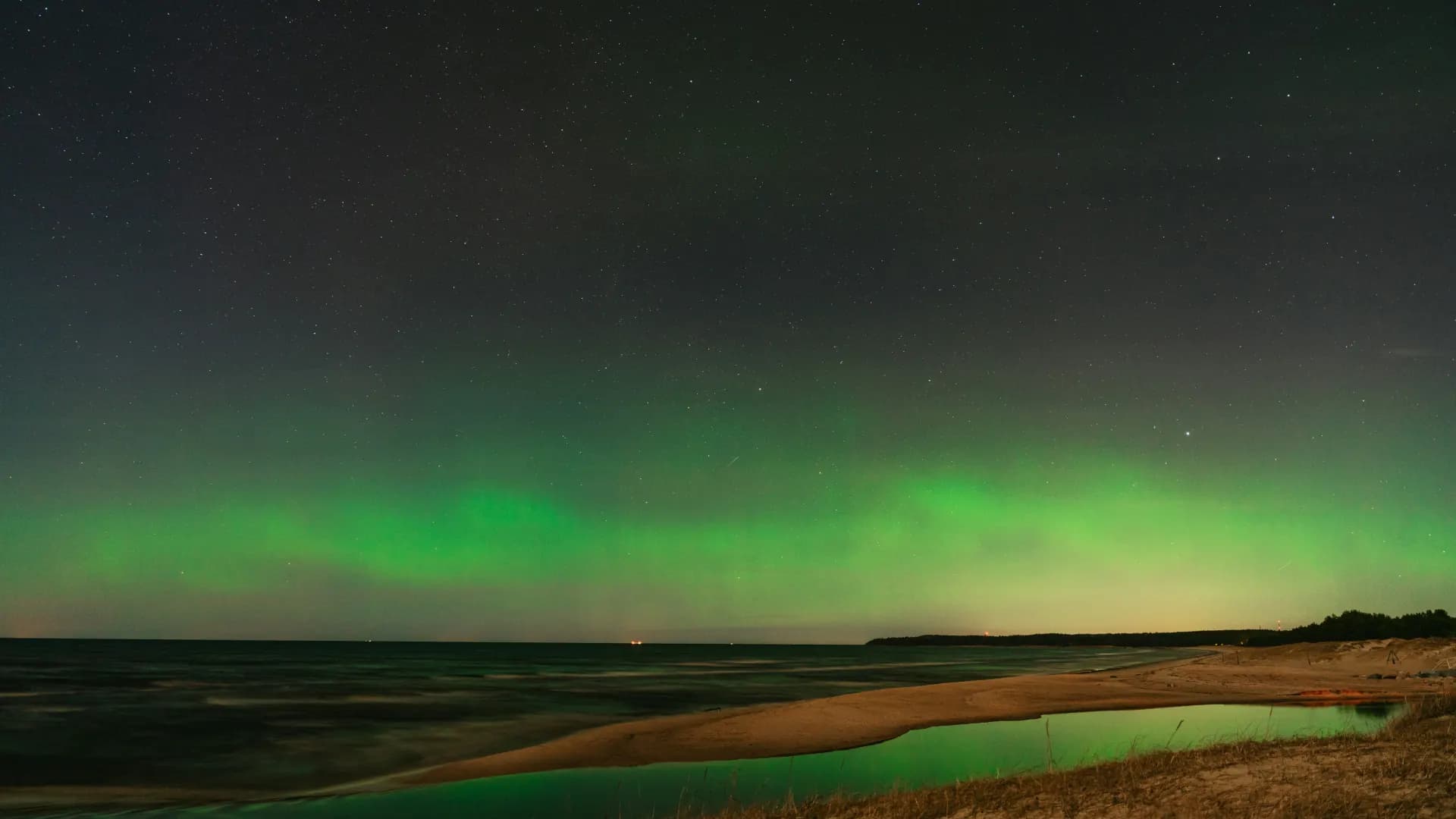
Longyearbyen sits at 78°N on the Svalbard archipelago, making it the world's northernmost permanent settlement and one of the most extraordinary places on Earth to witness the aurora borealis. During polar night — which runs from late October through mid-February — the sun never rises, plunging the landscape into a prolonged twilight ideal for aurora observation. The town is small, with roughly 2,400 residents, but the infrastructure for polar tourism is well-developed. Snowmobile expeditions into the wilderness, dog-sled tours across frozen tundra, and guided photography trips deliver visitors to spots entirely free of artificial light, where the aurora dances overhead in vivid ribbons of green, magenta, and violet.
At geomagnetic latitude 75.5°N, Longyearbyen is so deep inside the auroral oval that displays are possible even during quiet geomagnetic conditions — KP 0 is sufficient for aurora overhead. The oval itself is centred around geomagnetic latitude 65–70°N, but Longyearbyen lies poleward of it, meaning aurora is seen to the south rather than the north, an unusual inversion for most visitors. During active geomagnetic storms, the entire sky can fill with structured arcs, curtains, and coronas simultaneously. The long polar night eliminates the twilight that curtails viewing at lower latitudes, providing uninterrupted dark-sky windows of up to 18 hours.
The optimal aurora window runs from mid-October through mid-February, coinciding exactly with polar night. October and November are particularly productive because geomagnetic activity is statistically higher around the autumn equinox. December and January offer the deepest darkness but come with severe cold. February begins to see civil twilight return. For a balance of cold endurance and astronomical darkness, late October through November is the sweet spot. March brings a return of daylight but geomagnetic activity remains elevated and temperatures begin moderating slightly.
Do not venture beyond the town's perimeter without a licensed guide and a rifle — polar bears patrol the outskirts year-round and encounters are a genuine risk. Book a guided snowmobile or dog-sled tour specifically marketed as an aurora excursion; guides know the best dark-sky spots 10–20 km from town. Dress in layers suitable for –20 to –30°C: expedition-grade base layer, insulating mid-layer, and a windproof outer shell. Hand warmers inside gloves and keeping camera batteries warm in an inner pocket are essential. The UNIS research station area on the eastern edge offers a good open sky with minimal town glow.
Svalbard's climate is classified as polar tundra. Longyearbyen receives relatively little precipitation — annual snowfall is moderate — but frequent cloud cover driven by Atlantic weather systems remains the main obstacle to aurora viewing. The Norwegian Sea sends low-pressure systems eastward across the archipelago, sometimes producing overcast periods lasting several days. That said, the interior valleys can clear quickly when high pressure builds over the Barents Sea. October and November typically offer the best cloud-frequency statistics, while December can be persistently overcast. Winds are consistently strong — gusts exceeding 50 km/h are common — making wind chill the dominant cold exposure factor.
Frequently Asked Questions
Can you see the northern lights in Longyearbyen?
Yes — Longyearbyen is arguably the world's best aurora destination. At 78°N inside the auroral oval, even KP 0 (the quietest possible geomagnetic conditions) can produce visible aurora. During polar night from late October to mid-February, displays can last all night. The main limiting factor is cloud cover, not geomagnetic activity.
What KP index is needed to see aurora in Longyearbyen?
Technically KP 0. Because Longyearbyen sits at geomagnetic latitude 75.5°N — poleward of the auroral oval's core — aurora appears even during near-silent solar conditions. During KP 3 or above, expect vivid overhead displays. At KP 5+, the entire sky can be lit from horizon to horizon with structure and colour.
When is the best time to see northern lights in Longyearbyen?
The polar night window of mid-October to mid-February offers uninterrupted darkness and the best aurora opportunity. Late October and November combine good geomagnetic statistics with the start of deep darkness. January is coldest but reliably dark. Avoid the summer months entirely — the midnight sun means 24-hour daylight and no aurora visibility.
Can I see the northern lights in Longyearbyen tonight?
Check PolarForecast's live KP forecast and Longyearbyen cloud cover map for tonight's conditions. Remember: in Longyearbyen, KP 0 is already enough for aurora during polar night. The real variable is whether the sky is clear. If the cloud forecast shows a clear window between midnight and 2 AM, get out of town with a guide.